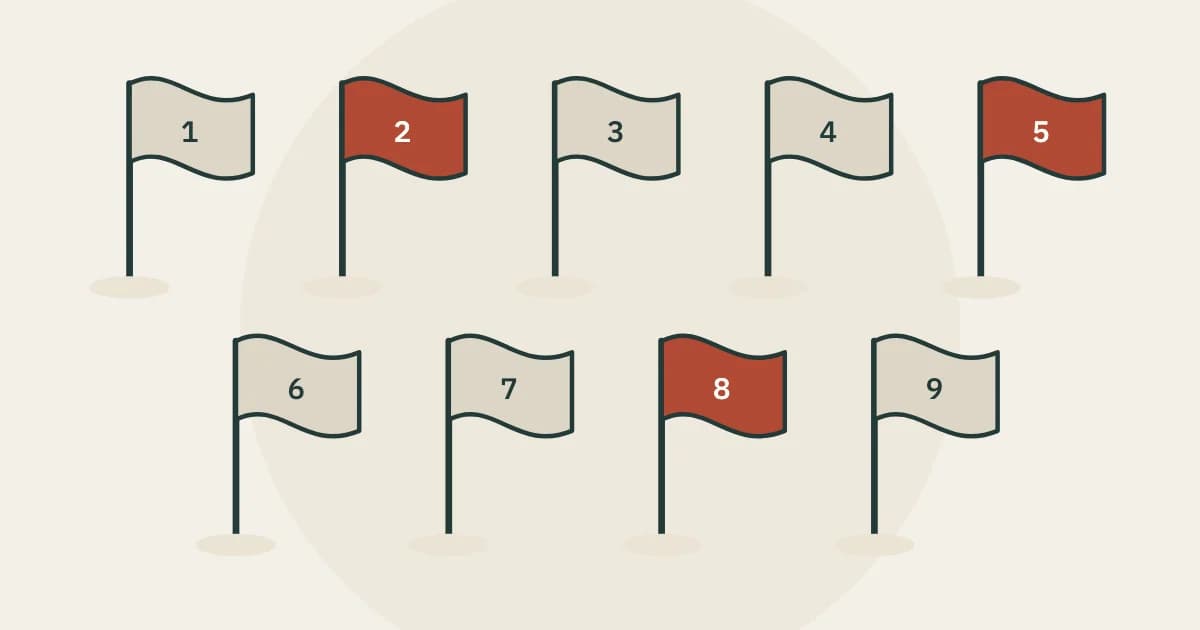
A cowboy builder is a trader who takes on work they are not able or willing to do properly: they cut corners, overcharge, leave jobs unfinished, or disappear with a deposit. They are rarely easy to spot on the first visit, because charm costs nothing. What gives them away is how they handle quotes, money, paperwork and questions.
This guide covers the nine warning signs that matter most, the public registers that confirm who you are dealing with, and what the law says if a job goes wrong. It applies whether you are hiring a builder for an extension, a roofer for a leak or a plasterer for one room.
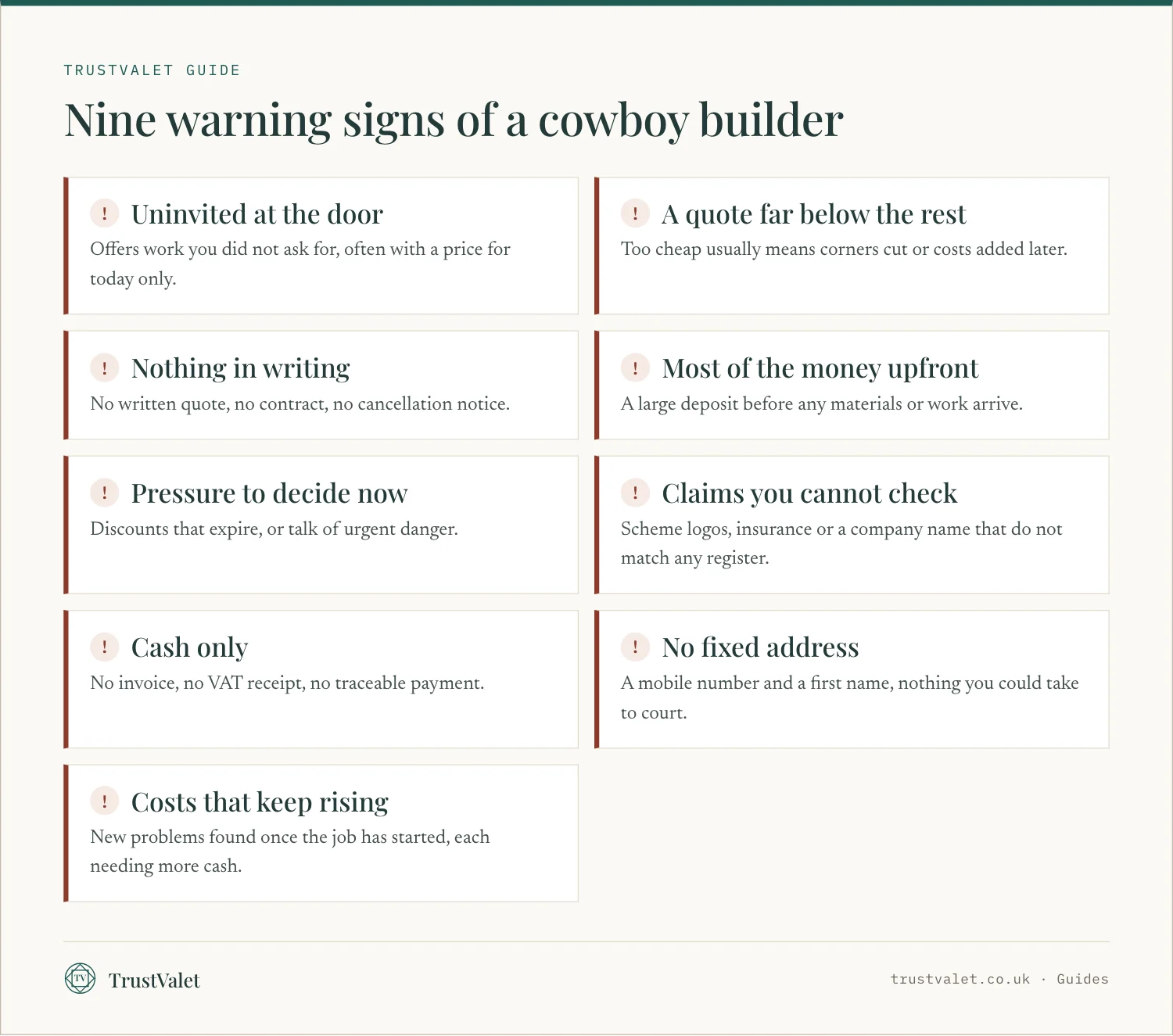
The nine warning signs
1. They turn up uninvited
Reputable builders are busy and rarely knock on doors looking for work. A trader who "noticed your roof" or "has materials left over from a job nearby" is using urgency to get past your judgement. Take their details, close the door, and check them later like any other trader. If the work is genuinely needed, it will still be needed next week.
If you do agree to work at your door, the law is on your side. For a contract made in your home, the trader must give you written information about your right to cancel within 14 days. Not giving it is a criminal offence, and you can report it to Trading Standards through Citizens Advice.
2. The quote is far below everyone else's
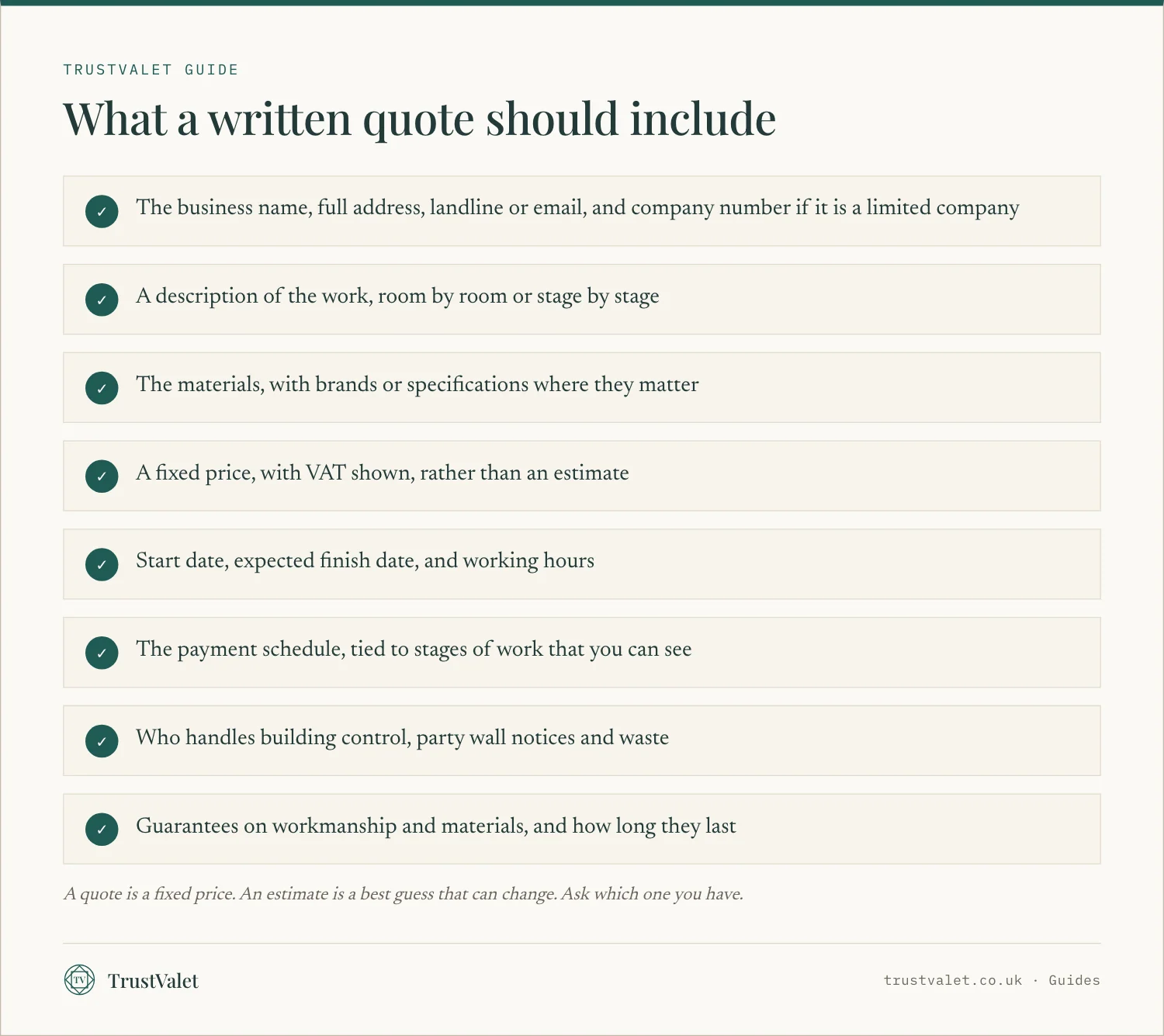
Materials and labour cost roughly the same for everyone. When one quote is much lower than the others, the difference usually comes from cheaper materials, skipped steps, or costs added once the work has started. Always get at least three written quotes and compare what each one includes, not just the total.
3. Nothing is put in writing
A trader who will not put a quote or contract in writing is keeping their options open, not yours. The written quote is your record of what was promised. Without it, a dispute becomes your word against theirs.
4. They want most of the money upfront
No law sets the size of a deposit, but a request for most of the price before any materials arrive is a serious warning. Many reputable firms ask for a modest deposit, sometimes none, and then take payments as each stage is finished. Agree the stages before work starts, and never pay for work that has not been done.
How you pay matters too. Paying part of the cost by credit card, for a job priced between £100 and £30,000, gives you a claim against the card provider under Section 75 of the Consumer Credit Act 1974 if the trader breaches the contract or goes out of business.
5. They push you to decide today
"This price is only for today." "That chimney could come down any minute." Pressure is a sales technique, not a safety assessment. A good builder expects you to take time, get other quotes and ask questions. If a trader becomes impatient when you do, you have learned what you needed to know.
6. Their claims do not match any register
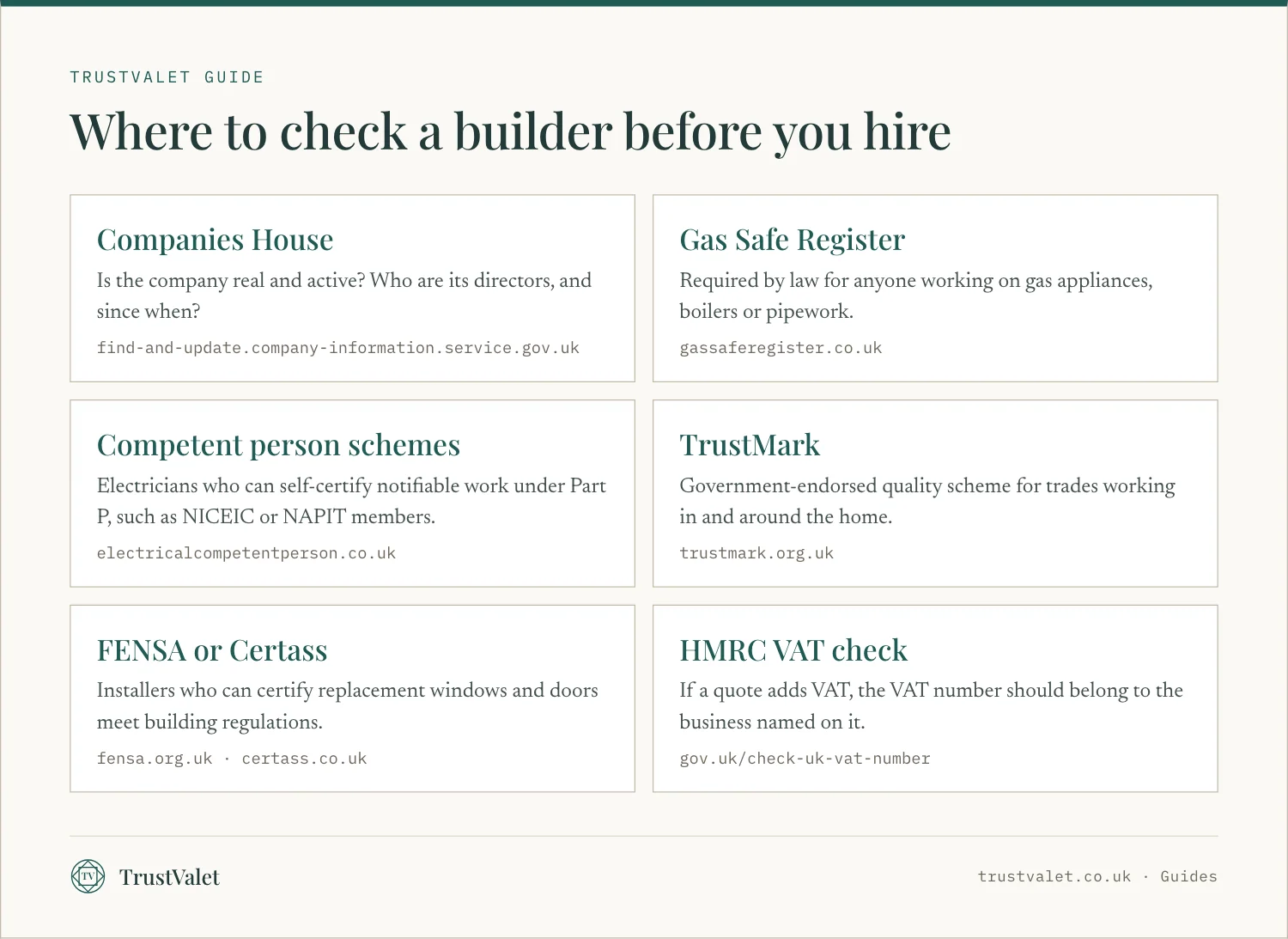
Logos on a van or a website are easy to copy. What matters is whether the business appears on the register behind the logo. Gas work is the clearest case: anyone working on gas appliances in your home must by law be on the Gas Safe Register, and you can check the engineer's card and number online. Electrical work that is notifiable under Part P of the building regulations should be done by an electrician registered with a competent person scheme, or signed off by building control.
If the trader says they are a limited company, look the company up. A company that was set up last month, has been dissolved, or has a different name from the one on the quote is worth a question. You can search every company in our register and see what Companies House holds, with the date we read it.
7. They ask for cash only
Cash leaves no record of what you paid, to whom, or for what. A trader who insists on it may be avoiding tax, and will be hard to hold to account later. Ask for an invoice for every payment, with the business name and address on it, and pay by card or bank transfer.
8. You cannot find a fixed address
A mobile number and a first name are not enough. Before you agree anything, get the business's full name and address, and check that the address exists and matches the one on the quote. If something goes wrong, this is the address you would write to, and the one a court would need.
9. The price keeps growing once work starts
Some problems only appear once a wall is opened or a roof is stripped. A professional explains them, shows you, and agrees any change in writing before doing extra work. A cowboy finds a new problem every few days, each one needing cash at once. If costs are climbing without written variations, stop and take stock before paying any more.
How to hire a builder you can trust
Good builders are usually booked weeks ahead, happy to put everything in writing, and able to show you finished work nearby. Ask friends and neighbours who they have used, and ask the builder for two or three recent customers you can speak to.
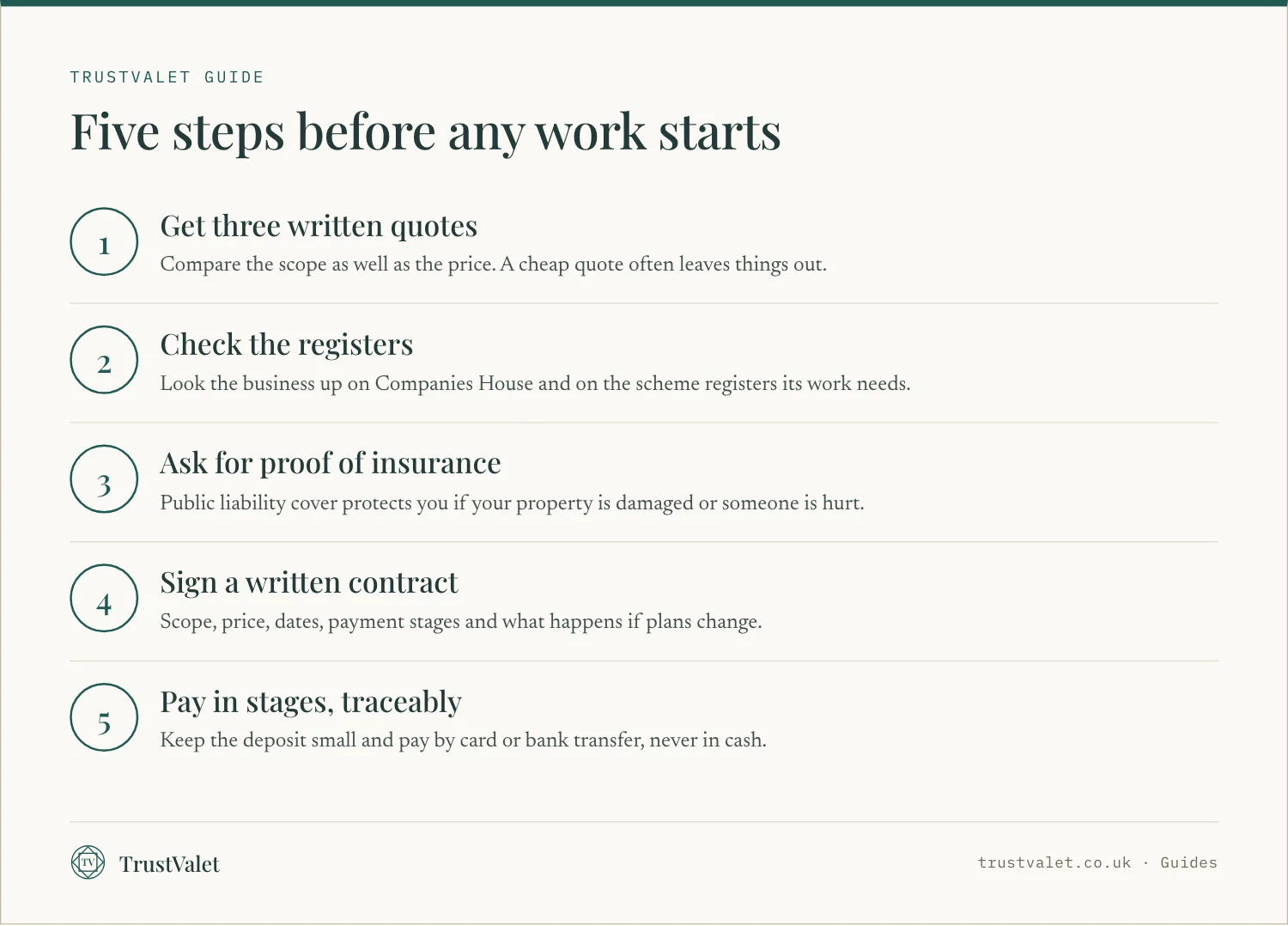
For larger projects, check who is responsible for building regulations approval and, if you share a wall with a neighbour, for any party wall notice. The builder or your designer usually handles these. The person carrying out the work is responsible for meeting building regulations, but as the owner you can be served an enforcement notice if the work does not comply, so agree in the contract who applies for approval and who obtains the completion certificate.
Our guide to checking whether a tradesperson is qualified goes through each trade in more detail, and ten questions to ask before hiring any tradesperson gives you a script for the first visit.
If the work goes wrong
Under the Consumer Rights Act 2015, a trader must carry out a service with reasonable care and skill, within a reasonable time if no time was agreed, and at a reasonable price if no price was agreed. If the work falls short, you can ask the trader to put it right at their own cost, and if they cannot or will not, you may be entitled to a price reduction.
- Stop paying for further work until the problem is resolved.
- Photograph the work and keep every message, quote and receipt.
- Write to the business at its address, describe the problem and give a reasonable deadline to fix it.
- If the trader belongs to a scheme such as TrustMark, use the scheme's complaints and dispute process.
- Contact the Citizens Advice consumer helpline, which can refer the case to Trading Standards.
- As a last step, you can make a claim through the small claims court for amounts up to £10,000 in England and Wales.
If you believe you were deliberately misled or defrauded, report it to Report Fraud, the UK's national fraud reporting service, as well.
How TrustValet can help
Every company in our register is built from public records: we show whether the company is active, when it was incorporated, who controls it and whether its filings are up to date, each with the source and the date we read it. A company that has been verified carries a dated certificate you can check. None of this replaces your own checks, but it is a quick first look before you invite anyone into your home. Browse builders, roofing contractors or companies by town, or read how we verify.
Questions
What is a cowboy builder?
A trader who takes on building work they are not able or willing to do properly: they cut corners, overcharge, leave jobs unfinished or take a deposit and disappear. The term covers poor workmanship as well as outright fraud.
How much deposit should I pay a builder?
No law sets a figure. Many reputable builders ask for a modest deposit, sometimes none, and take the rest in stages as work is completed. Be wary of anyone who wants most of the price before materials arrive, and pay by card or bank transfer so there is a record.
Can I cancel a building contract I signed at home?
Usually yes. For contracts made in your home, the Consumer Contracts Regulations give you 14 days to cancel, and the trader must give you written cancellation information. If you asked them to start within those 14 days, you may have to pay for work already done.
How do I check a builder is registered?
Check the company on Companies House, and check the register for the work involved: Gas Safe for gas, a competent person scheme such as NICEIC or NAPIT for electrics, FENSA or Certass for windows, and TrustMark for its approved trades.
What can I do if a builder does bad work?
Under the Consumer Rights Act 2015 the work must be done with reasonable care and skill. Write to the business asking it to put things right by a deadline, use any trade scheme's complaints process, and contact Citizens Advice. For amounts up to £10,000 in England and Wales you can use the small claims court.
Check the company first
Before you pay anyone, look the company up. Every page in the register shows what Companies House says, with the date we read it.
Ala Ciobanu · Ala Ciobanu edits the TrustValet guides. Every guide names its sources.
- Consumer protection rights (GOV.UK)
- Consumer Rights Act 2015, services (legislation.gov.uk)
- Consumer Contracts Regulations 2013 (legislation.gov.uk)
- Consumer Credit Act 1974, section 75 (legislation.gov.uk)
- Building regulations approval (GOV.UK)
- Make a court claim for money (GOV.UK)
- Getting help with a consumer problem (Citizens Advice)
- Check an engineer (Gas Safe Register)